Kicking Off Our Collective Inquiry
We’re mobilizing as many people as possible to ask themselves: “what do we need to do differently?”. On August 19th, 2025, we kicked off our collective inquiry into youth outsiderness with a 70-person gathering in Bærum Municipality.
Category:
Event
Author:
Josina
Location:
Bærum
Date:
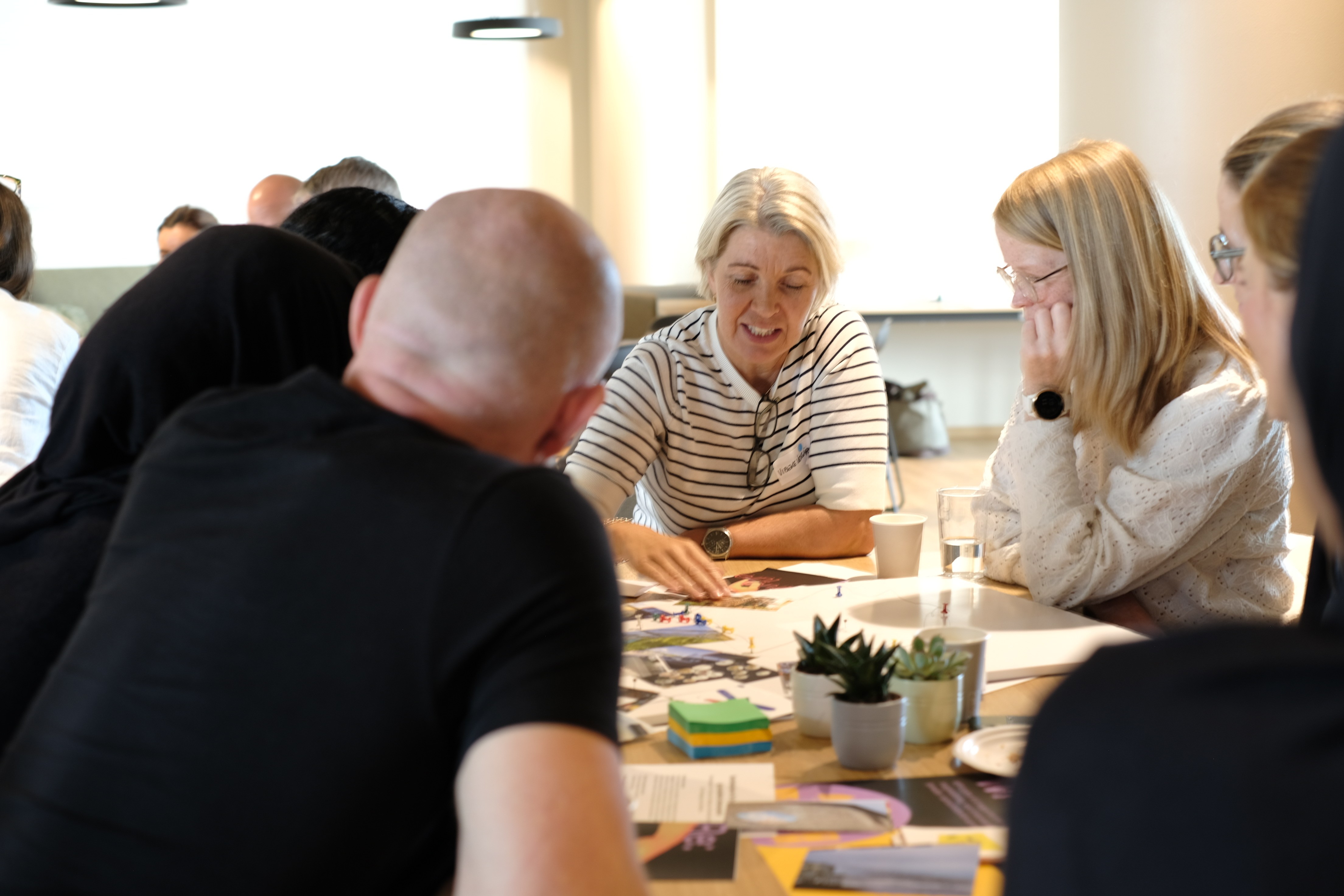
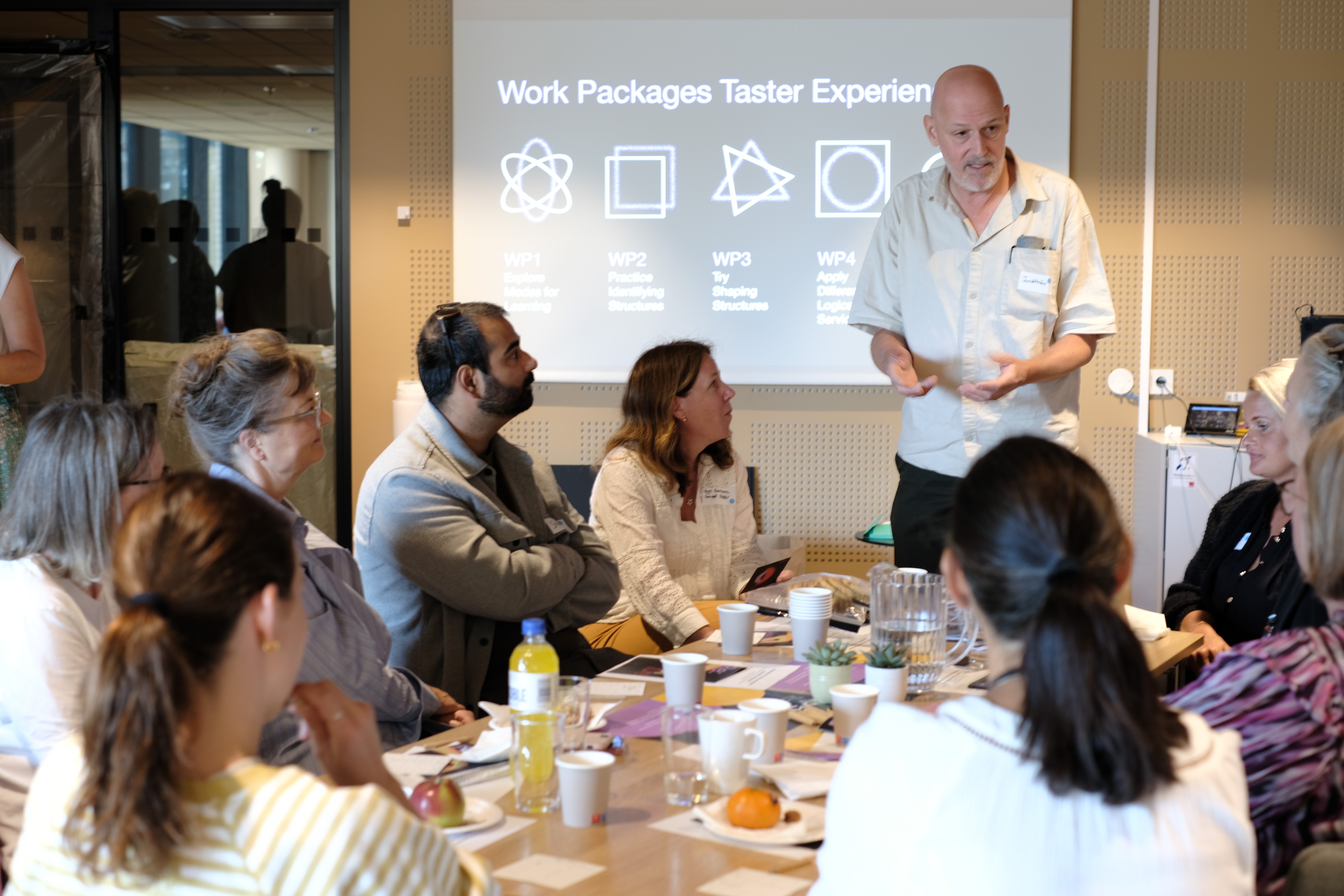
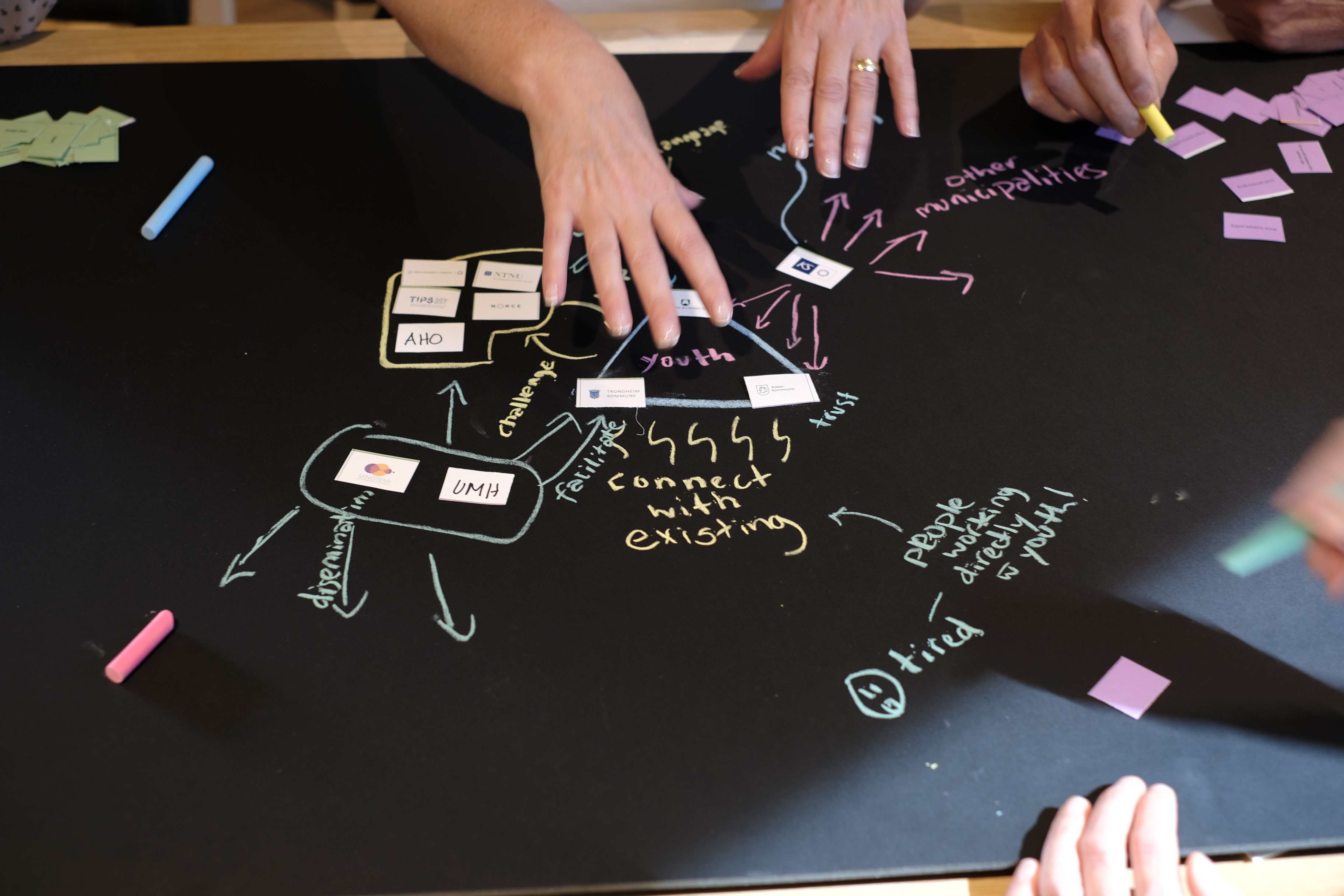
This gathering signaled the beginning of our four-year exploration into changing municipal service systems to prevent youth outsiderness. The event brought together youth, service providers, leaders, community organizers, and researchers to explore experiences of insiderness and outsiderness and build a foundation for joint action. At my table, we discussed the need for fluidity and porousness in moving inside and outside of different social spheres. One youth highlighted that being outside of the mainstream isn’t inherently bad and sometimes needs to be supported. We talked about the ways that one can be perceived as inside and still feel deeply outside. Across various system actors, we shared our lived experiences of navigating the tensions of belonging and othering in society. The goal of preventing youth outsiderness was, thus, muddled right from the beginning. We frame this work as a collective inquiry because we don’t see it as a straightforward project with pre-determined outcomes to be executed by a few people. Instead, the transformation that we seek within youth municipal service systems is contested, made up of many interdependent issues and largely unknown. We need to learn from each other—the broad array of folks that are influencing and influenced by these service systems—and through experimental action together to explore the systemic consequences of possible changes. There seemed to me to be a readiness in the room. A hunger for doing things differently. A sense of shared commitment to action. But occasionally, the status quo, with its great inertia, also pulled us in when we started to repeat typical system speak and service jargon. It’s not a direct path to change. Recognizing that we are the system, part of this process also relies on changing our own ways of thinking and working in relation to youth outsiderness. We need to help each other stay in the space of exploring and letting our direction for collective action co-evolve with our shared learning.
Many of the young people who have worked with Re:Structure say that outsiderness doesn’t feel like a particularly relevant term to them. This echoes findings from Perspektivmelding Ung, in which none of the more than 1,600 young people surveyed described themselves as experiencing “outsiderness”.
Yet outsiderness has become an increasingly important policy category. Substantial resources are devoted to understanding, preventing and reducing it.
Last year also saw the launch of one of Norway’s first national missions. Called No child or young person left outside!. The mission aims to mobilize a broad range of actors to significantly reduce outsiderness among children and young people by 2035.
Like Re:Structure, the mission is concerned with systemic change. Still, I wonder whether the way the problem itself is framed pulls us in a different direction. The problem is that too many children and young people are on the outside, and the solution is to get better at preventing and reducing that outsiderness.
Even though the ambition is to change systems, the stated goal is for fewer young people to be on the outside. I think this way of talking about the problem makes it easier to focus on young people, but harder to see what pushes them out.
To change systems, I think we need to start talk more about exclusion. While outsiderness describes where people are, exclusion draws attention to what puts them there.
Focusing on the mechanisms that push people out opens up questions such as: Which norms and expectations make it difficult for young people to participate? What roles and communities do we offer them? And how do we need to change services so that financial circumstances or cultural background don’t stand in the way of everyone contributing?
Re:Structure, like the national mission, aims to bring about systemic change. We should therefore use language that makes the system itself a more explicit part of both the problem and the solution.
If the problem is that many young people experience outsiderness, it’s natural to want to prevent them from ending up there. If the problem is exclusion, we also have to ask what we need to stop and what we need to change. There is a difference between preventing outsiderness and stopping exclusion. Perhaps we could also turn our attention to creating inclusion.
So I’m going to start talking more about exclusion. Not because the word itself solves anything. But because it helps me focus on what we actually need to change.









FUNDED BY: