Involving Young People Without Othering Them
Public services often talk about “target groups” when trying to address exclusion among young people. Yet these categorizations tend to focus on what is different about the young people themselves. What might change if we instead focused on what their experiences reveal about systems that struggle to include them?
Category:
Work in progress
Author:
Audun
Date:
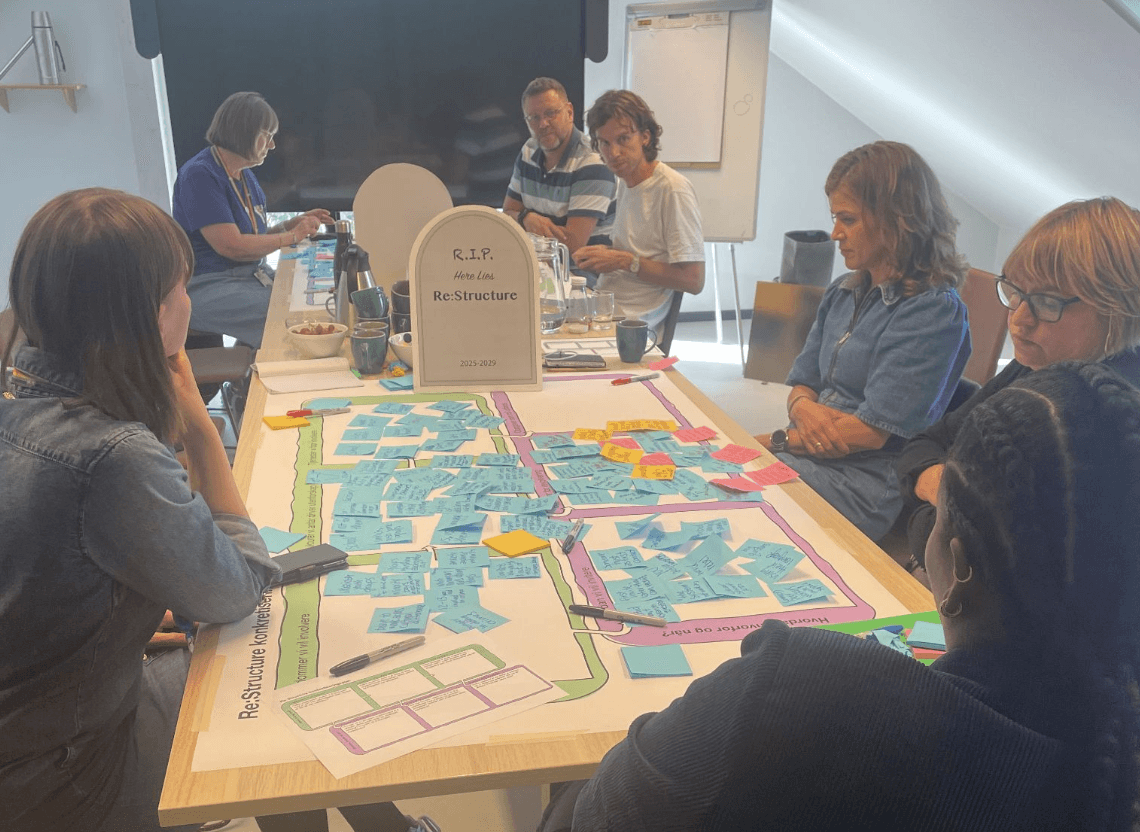
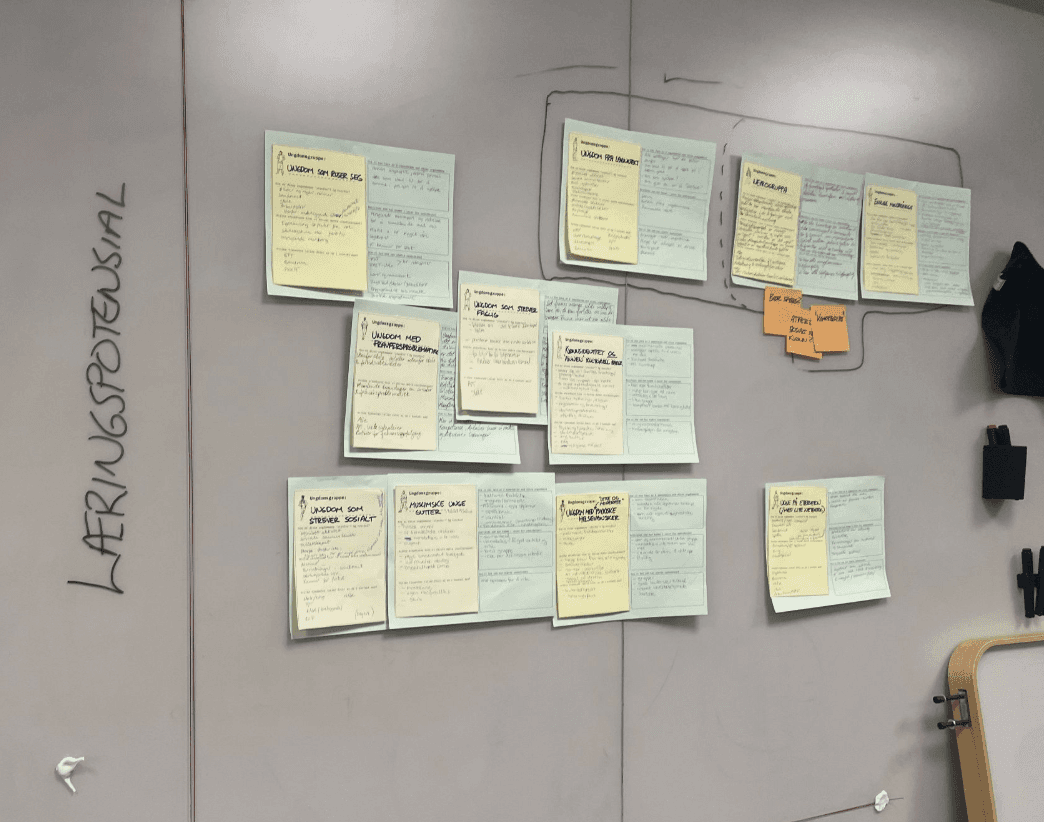
Re:Structure is a participatory research project. This means that we aim to develop knowledge together with the people who are directly affected by that knowledge. In our case, that includes both young people and the professionals working within the systems we are trying to make less exclusionary. When I spoke about this the other day, one of the young co-researchers employed in the project responded: “Isn’t that really just democracy?” I thought it was a sharp observation. In my work, I've been trying to understand what democracy is when it is not reduced to only choosing who represents us in elections. Democracy can also takes more direct forms, where people influence the services and decisions that shape their everyday lives. For young people, municipal services such as schools, child welfare services, and youth clubs make up a significant part of everyday life. And when these services play such a central role, it becomes a democratic matter that they are part of shaping them. This is a core principle of what is known as participatory design, which forms a key foundation of Re:Structure. To better understand how municipal services can help prevent social exclusion, we especially want to involve young people who are not currently well served by the system. Throughout the fall, we have therefore worked in each municipality to identify who they struggle to reach—and whose experiences the system might actually learn from if they were more actively involved. This has proven easier said than done. Not because there are too few young people with relevant experiences, but because the barriers to participation are often built into the very way we approach the problem. One such barrier concerns language and categories: the way we talk about “those on the outside” can itself reinforce exclusion. As we have worked to recruit participants for the project, I have become increasingly aware of how accustomed we are to talking about target groups. They are almost always defined by characteristics of the young people themselves: neurodivergent youth, genderqueer youth, unaccompanied minors, and so on. Categories like these can turn young people into “the other.” The focus shifts to their individual traits, and the problem comes to be framed as something about them. What happens if we turn the perspective around? If instead of saying that “more young people are falling outside,” we ask whether our systems are becoming less inclusive? And whether moving forward therefore requires that those who actually experience friction in their encounters with these systems also have a role in shaping them? We believe that opening the door for participation depends on involving young people on the basis of the experiences they bring, not because they fit into a predefined target group. While taking on a particular identity can be important for some, it is not up to us, as the system, to decide for them. I still struggle with what words and concepts I should use instead. I often catch myself fumbling for formulations that don’t quite land. But perhaps that, too, is part of the work: trying, failing, and trying again, in an effort to find ways of talking about exclusion that do not at the same time help sustain it. PS: Our partner Minotenk just released a brilliant book on inclusive language (in Norwegian). Check it out here: https://minotenk.no/wp-content/uploads/2026/02/Minotenk_Ordbok-1-1-1.pdf








FUNDED BY: